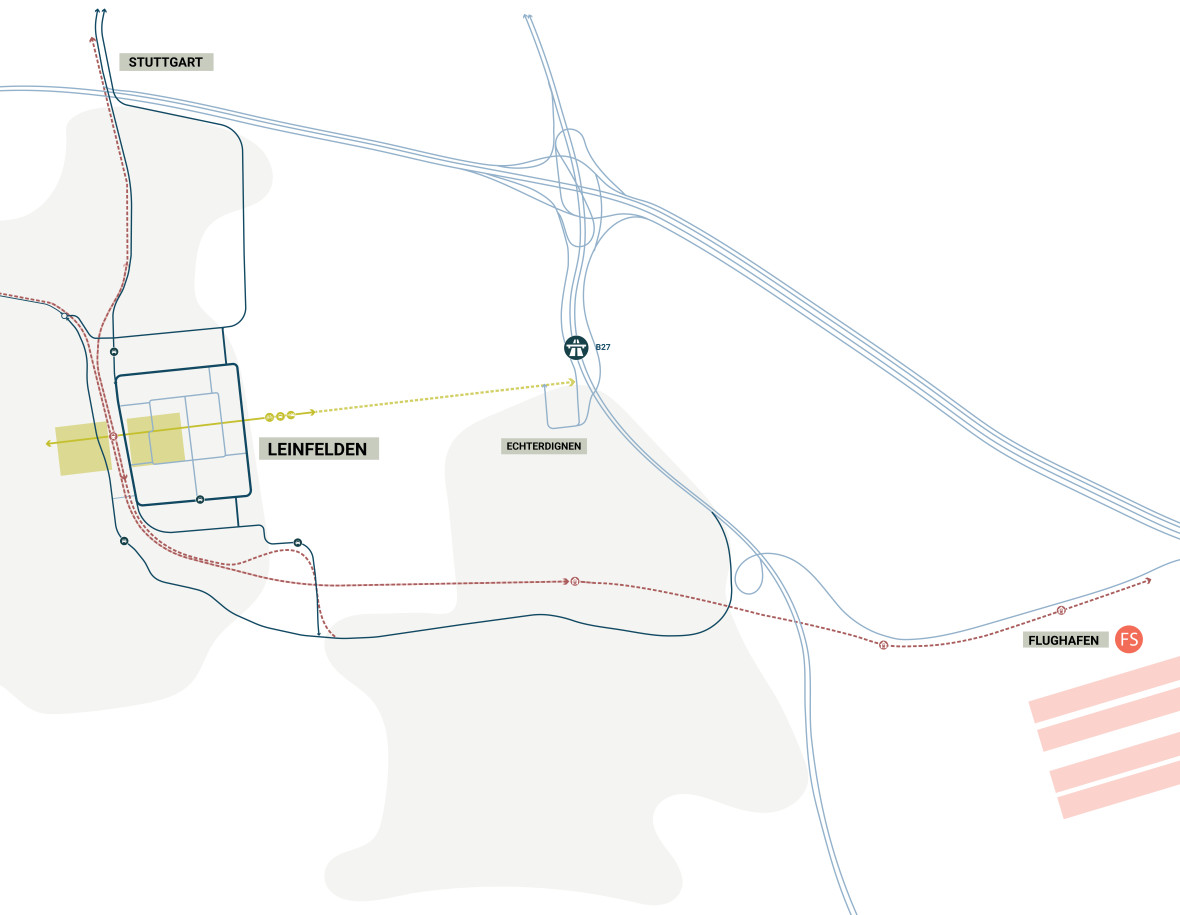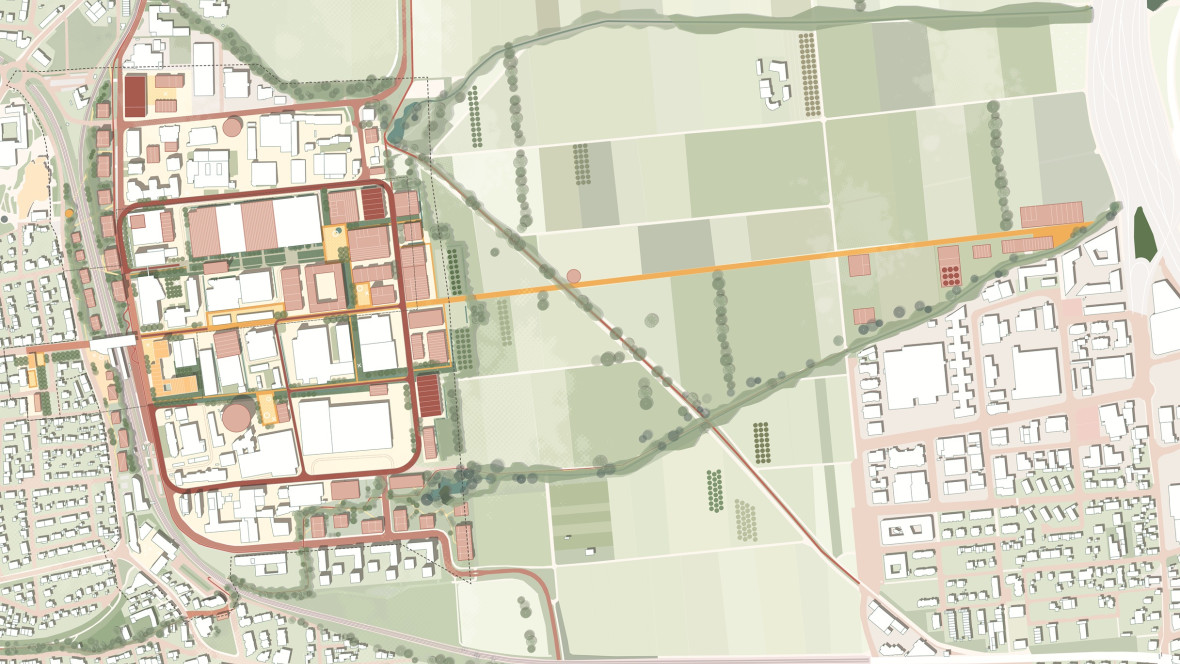
Germany's changing economy is causing a change in how cities are built. As the boundaries between production, research, and services become increasingly indistinct, the physical structures that support these functions must adapt accordingly. In the recent cooperative workshop for the "Leinfelden Valley" development, Karres en Brands was awarded second place, receiving praise for a vision that demonstrates the ability to navigate the evolving landscape.
The jury recognized our innovative approach throughout the workshop process. Mayor Otto Ruppaner and Chair Markus Müller specifically expressed their gratitude to Bart Brands and the team, stating: “With their exceptional perspective and the way they framed the project within the regional and citywide urban and landscape context, they opened new horizons and made a decisive contribution to its success.”
In the past, train tracks divided the city of Leinfelden into separate areas for living and working. Karres en Brands wants to connect people by creating strong connections through physical spaces and activities. The project combines everyday life with professional exchange, transforming the railway from something that separates to something that connects.
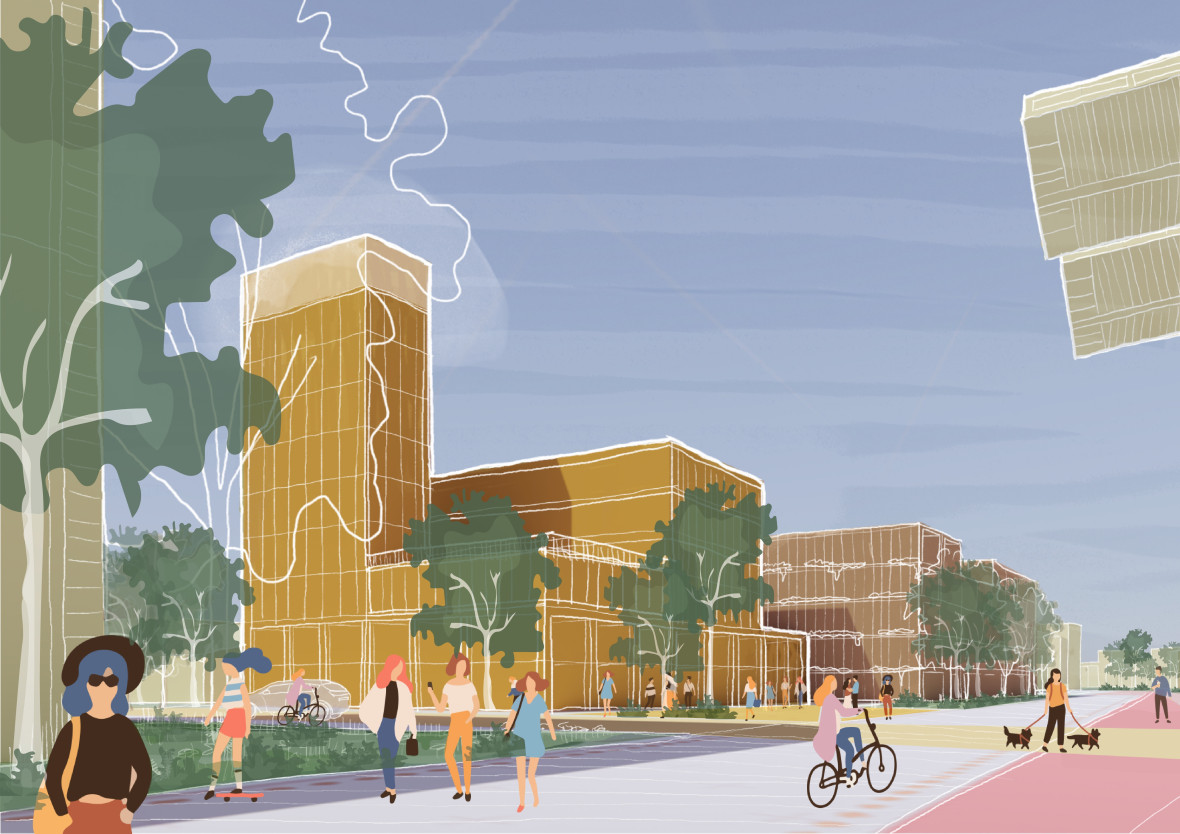
The so-called "Daily Urban System" is key to this plan to reorganise space. This system is a smart way to arrange commercial spaces and community programs. It is designed to make daily life easy. This system encourages people to interact with each other: residents can use the sports and dining facilities of the companies, and employees can enjoy a lively, connected public area.
To the east of the train tracks, the area around the BOSCH Campus is being reimagined as an open, mixed Innovation District. This is not just a business area; it's a mixed neighbourhood where people live, work, and do research. While the historic old town is being redeveloped with housing cooperatives, the Innovation District provides a lively, energetic environment that is unique to the region.
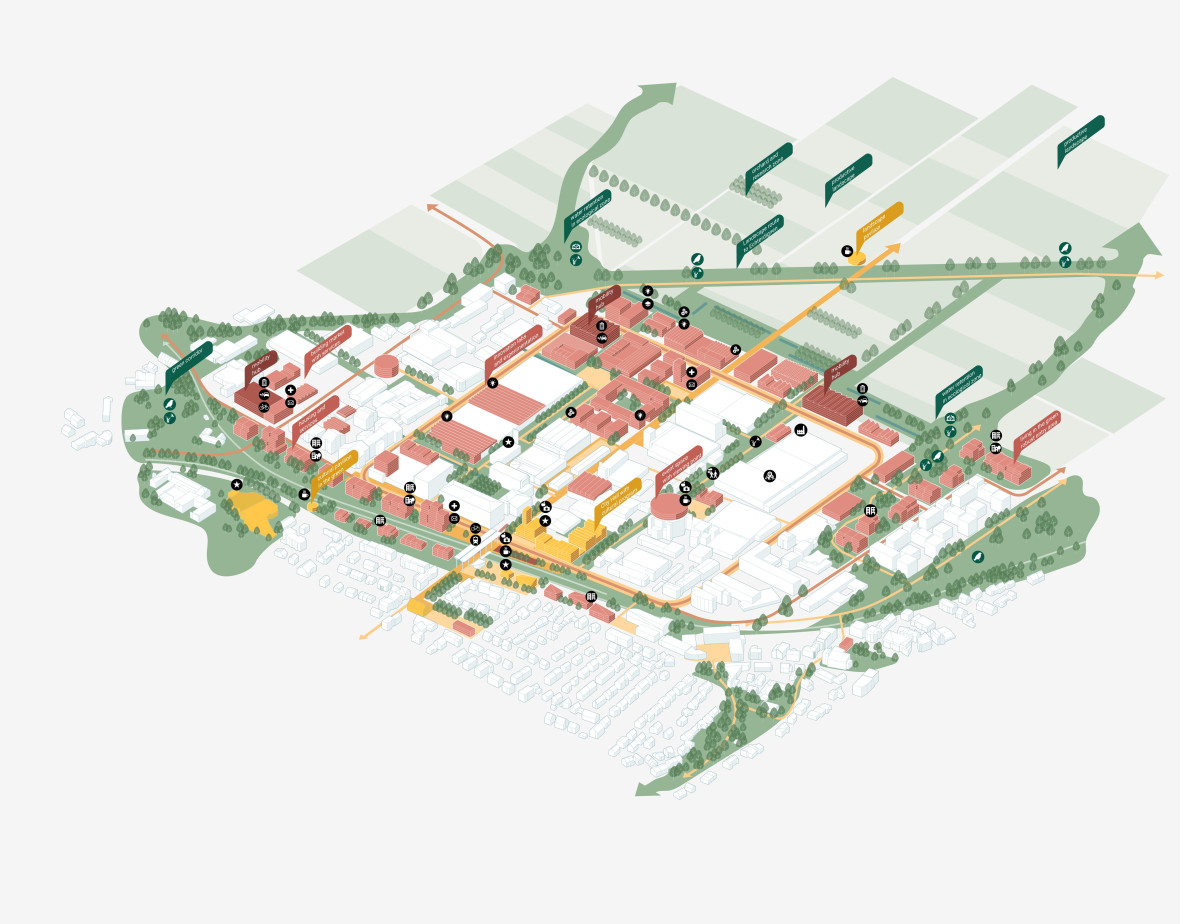
The new key connections are central to the concept. These connections include the integrated North Link and a prominent axis from the marketplace and town hall to the surrounding Filder landscape. This axis forms the backbone of the urban network and helps the city feel more connected to its natural surroundings, while the Leinfelden–Echterdingen connection further enhances this network by prioritizing ‘soft mobility’ alongside its excellent links to the B27 and the airport.
The idea is based on the idea that the city is already here. The design makes the existing built environment last a long time by using urban mining and adaptive reuse to turn it into new materials. To manage development over decades, Karres en Brands introduced a "Framework for Freedom." These guidelines and design tools can be used in different ways and adapted over time. It creates a "self-learning" urban structure that can change as the economy changes, making sure that Leinfelden remains strong, productive, and focused on people for many years to come.