
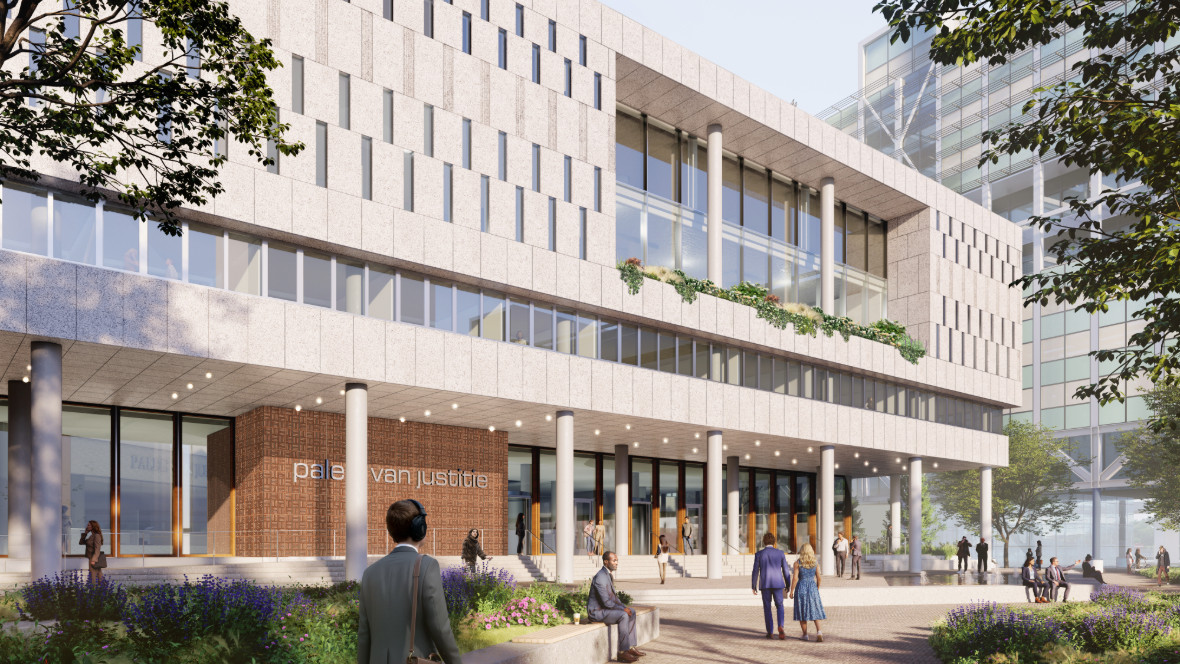
The large-scale transformation of the Palace of Justice in The Hague has entered its next phase. With the submission of the planning permission application and the imminent completion of the technical design, the consortium comprising Nudus, HUB architects, ABT and Karres en Brands is paving the way for one of the most ambitious circular ‘renovation’ projects in the Netherlands, as detailed in the recently published long read by Architectenweb. The project marks a turning point in the approach to government property: the existing 80,000 m² of buildings on Utrechtsebaan will not be demolished, but radically transformed into a complex with the quality of new-build.
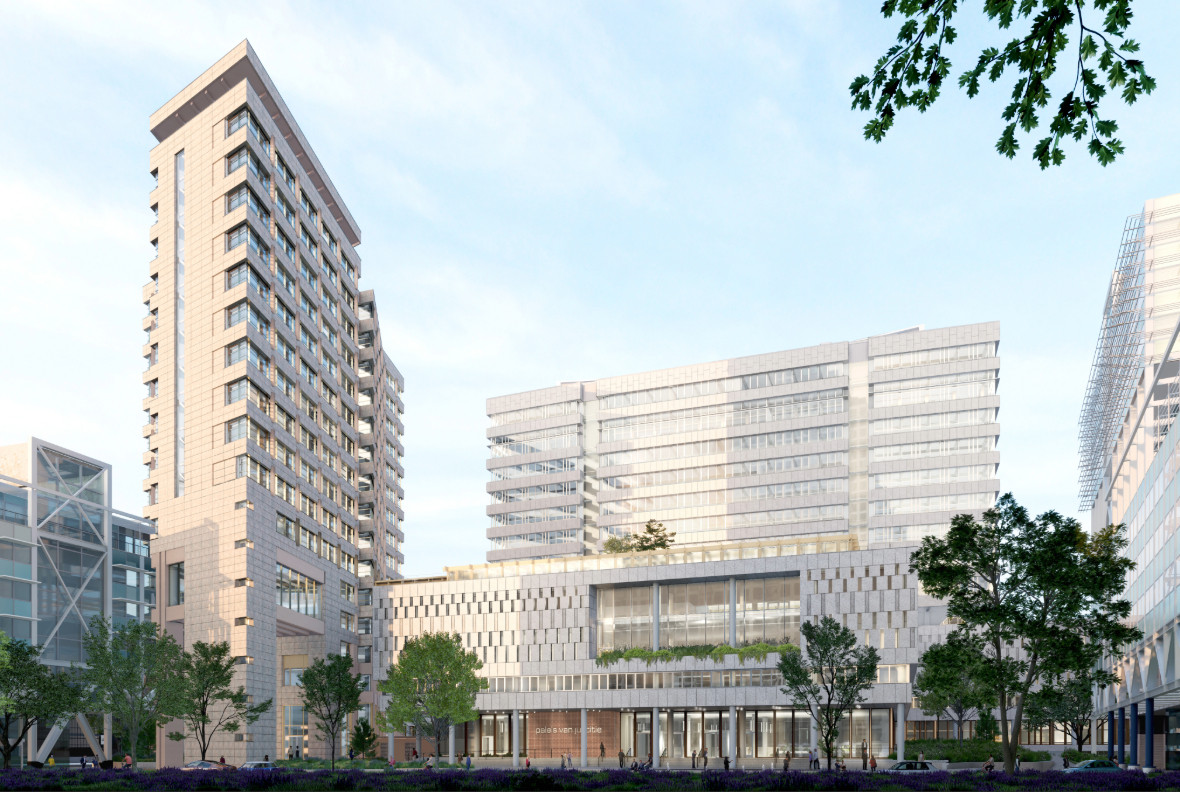
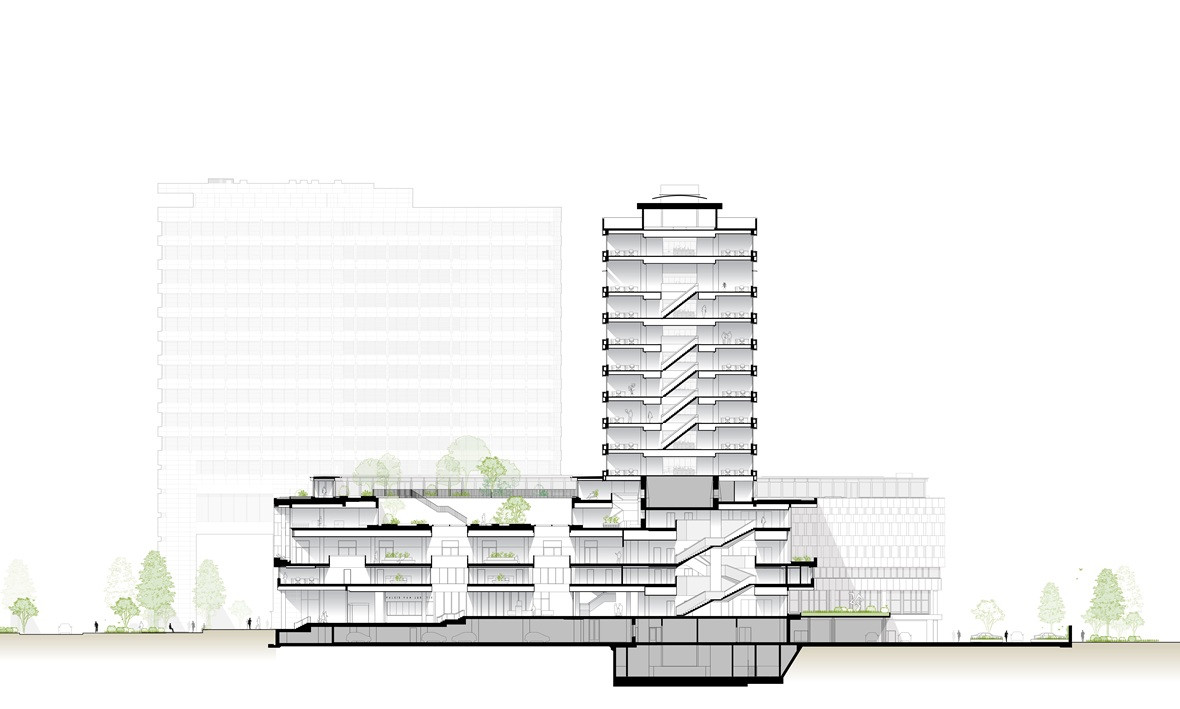
What makes this project special is the choice of preservation and reinterpretation as a design approach. Instead of a tabula rasa, the existing architecture by Sevenhuijsen (1970s) and Van Vugt (1990s) forms the starting point: not as a constraint, but as a clear ‘opportunity’ for the new design. The existing structure is interpreted and reused as the foundation for the transformation. This creates an architecturally layered whole in which past and present are deliberately interwoven. The design team builds on Sevenhuijsen’s brutalist style and adds a contemporary layer that opens up the complex and re-anchors it in its urban context. Through modifications to the plinth, façade and outdoor space, the existing colossus is transformed into a more accessible and human-scale place, without losing the monumentality of the original design.
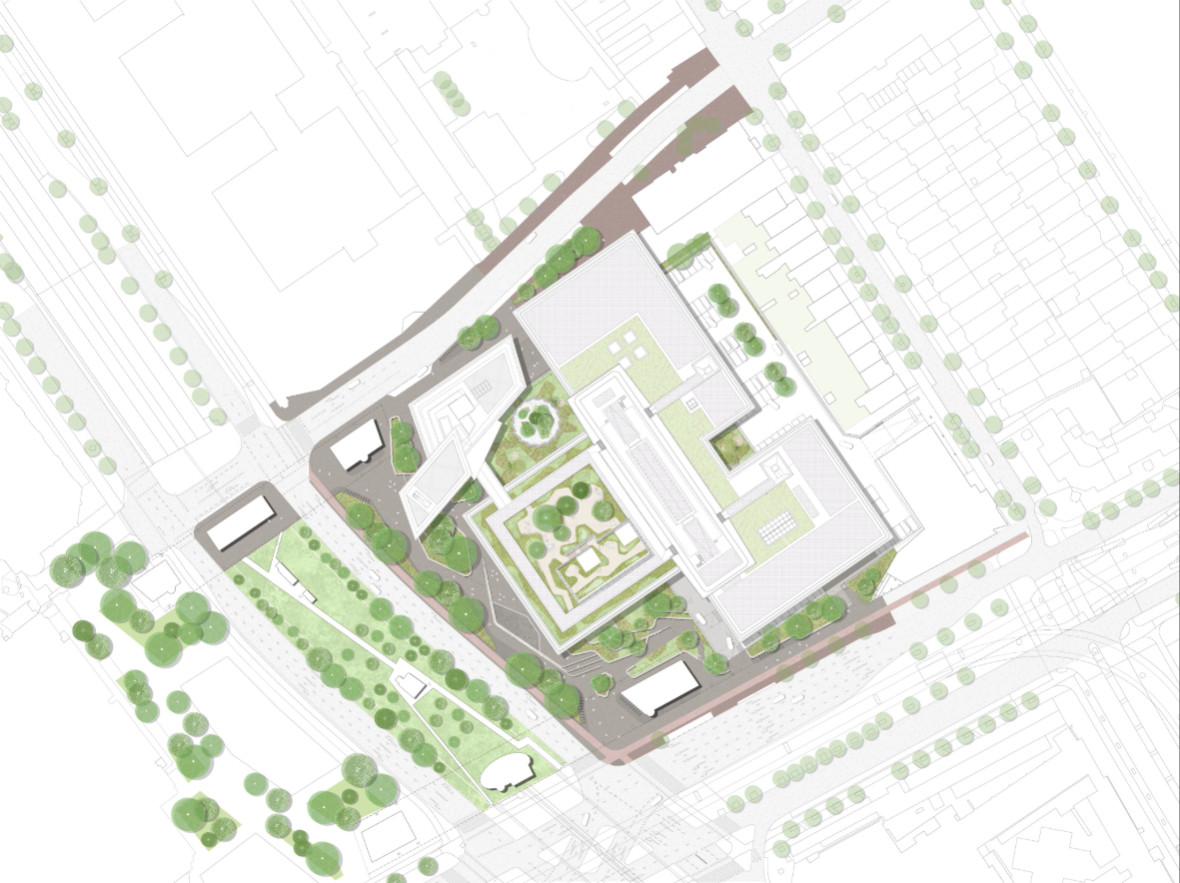
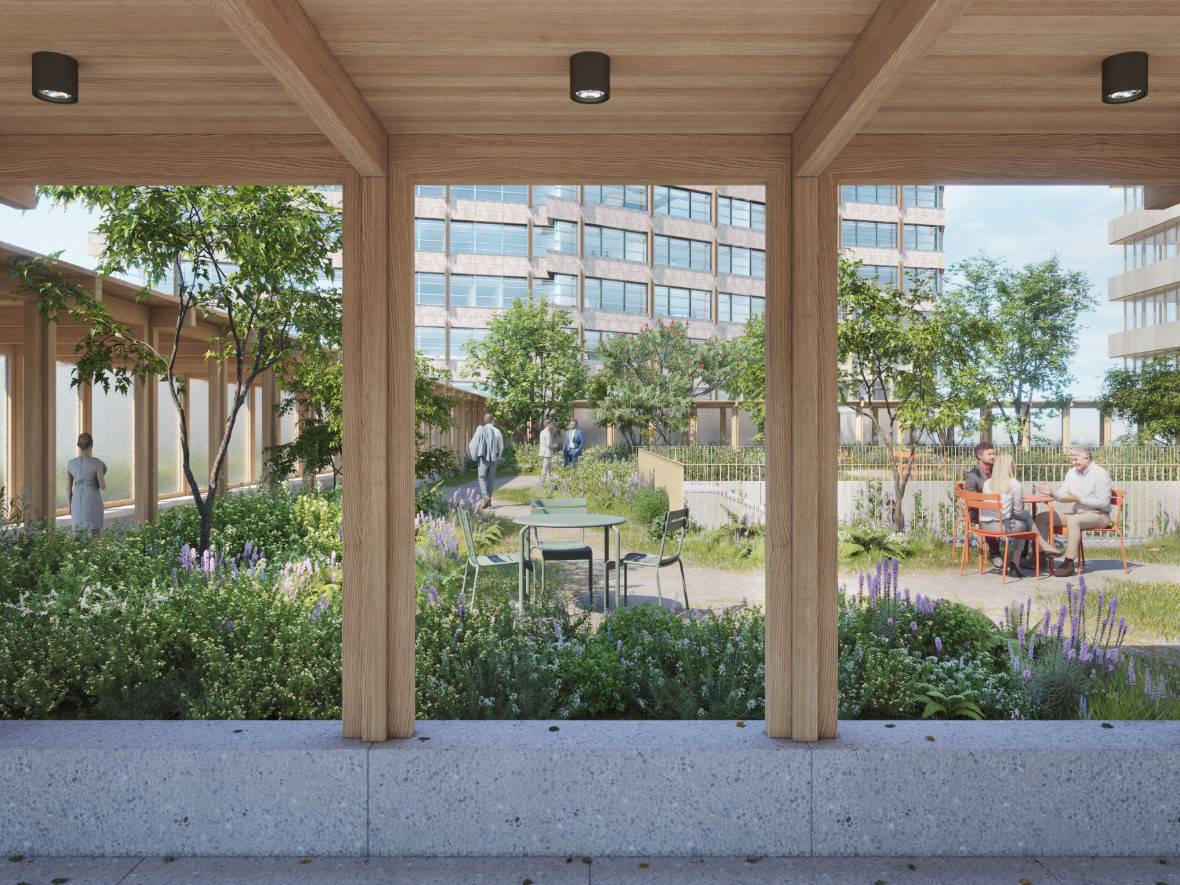
The project aims to green and humanise the existing colossal building. Karres and Brands’ design vision and landscape expertise are being utilised for the greening plan. Greenery plays an essential role in this, both for the (daily) users of the building and for the way in which the complex relates to its urban context. The design explicitly focuses on a stronger relationship with the outdoors, daylight and the seasons, so that the building is no longer perceived as a self-contained volume, but as a place with greater spatial quality and humanity.
This greening and humanisation are directly linked to the adaptations required to make a Palace of Justice suitable for contemporary use. Since the completion of the buildings by Sevenhuijsen and Van Vugt, the conditions under which the administration of justice takes place have changed radically. New requirements in terms of security, use, logistics and accommodation call for a contemporary reinterpretation of the complex. In particular, the safety of judges, lawyers and other judicial staff has become a key design challenge due to social and institutional developments. With this design, the Central Government Real Estate Agency and the consortium are setting a new standard for the sector: proof that large-scale, complex public buildings can be repurposed as future-proof monuments to circularity and greening.
Read the full article by JaapJan Berg on Architectenweb here: Circulaire renovatie Paleis van Justitie in Den Haag: ‘Hier worden bakens verzet’
Photos: Consortium PVJ